
Advancing Sustainable, Resilient & Equitable Affordable Housing Across Texas
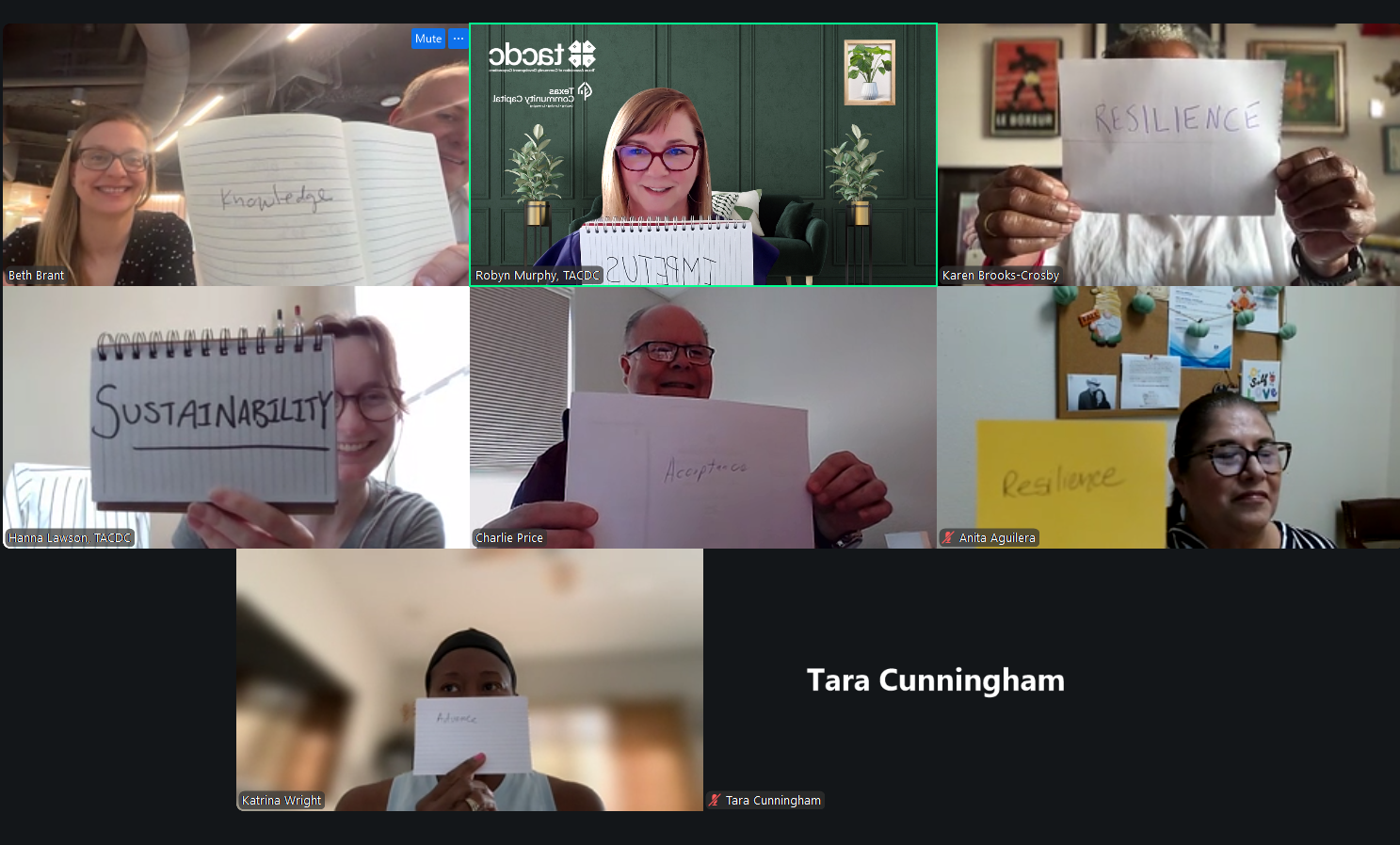
These single word responses represent deposits made into the future of Texas communities through the 2026 Green+ Training Series. We are immensely grateful to the Texas Association of Community Development Corporations (TACDC) for sponsoring and hosting the ten-month series. Because this was not cohort based, participants included community developers, foundations, staff members from various city governments, lenders, economic developers, academics, architects, engineers, designers and others.
🌿 Key Curriculum Highlights & Topics
Once a month from January - October 2026, expert facilitators guided participants through critical design and housing strategies, including:
Green Building Certifications: Foundations of third-party rating systems—including LEED, WELL, Fitwel, and the Living Building Challenge—to unlock funding, lower operational costs, and build healthier communities.
Climate Resilience & Survivability: Design strategies for site planning, material selection, passive survivability, and backup systems to help housing withstand heatwaves, flooding, hurricanes, and power disruptions.
A Leading “Green CDC” Practitioner: Foundation Communities, one of the largest nonprofit community development organizations in Texas discussed the how’s and why’s of its implementation of Green Certifications. It included case studies, performance metrics, and lessons learned from over 40 green building certifications across 20 properties—including the first LEED for Homes Platinum project and the first net-zero commercial building in Austin.
Passive Solar & Site Optimization: Low-cost passive design techniques—building orientation, shading, and window placement—tailored to Texas microclimates.
Energy Modeling & Net Zero Energy (NZE): Evaluating design choices early to reveal quick-payback efficiency strategies and transition toward net-zero energy buildings.
Renovation, Reuse & Embodied Carbon: Reusing and retrofitting existing building stock to reduce development costs and minimize carbon impact.
Healthy Materials & Indoor Air Quality: Transparency tools such as Environmental Product Declarations (EPDs) and Health Product Declarations (HPDs) that support occupant health and wellbeing.
Electrification & Decarbonization: Addressing operational and embodied carbon emissions to support long-term climate targets.
🙏 A Special Thanks to Our Expert Presenters & Partner Firms
We extend our deepest appreciation to the industry leaders and architectural firms who generously shared their time and technical expertise throughout the program:
DSGN: Beth Brant, AIA, LFA, LEED AP BD+C, Training Series Designer
Parkhill: Chris Mundell, AIA, LEED Fellow
Place Collaborative: Meghan Recher, AIA, LFA, LEED AP BD+C
Foundation Communities: Katelyn Essig & Jason Haskins, AIA, LEED AP BD+C
MEPCE: Adam Nemati, PE
Lake Flato: Kate Sector, Assoc. AIA, LEED AP BD+C
Sustainable Concepts: Tricia Loe, LEED AP BD+C
HKS: Allison Smith, IIDA, WELL AP, LEED AP ID+C
Perkins & Will: Victoria Wickard, AIA, LEED AP
🏘️ Driving Lasting Impact Across Texas Communities
Thank you to all the community development professionals and participating organizations! Your active engagement and commitment to implementing sustainable building strategies will directly contribute to healthier living environments, lower utility costs, and greater climate resilience for residents across the state.
Green+ and our colleagues in various parts of Texas are planning next steps.
